What Penalties Does the Oig Enforce When Physician Peer Reviews Are Not Done on Time

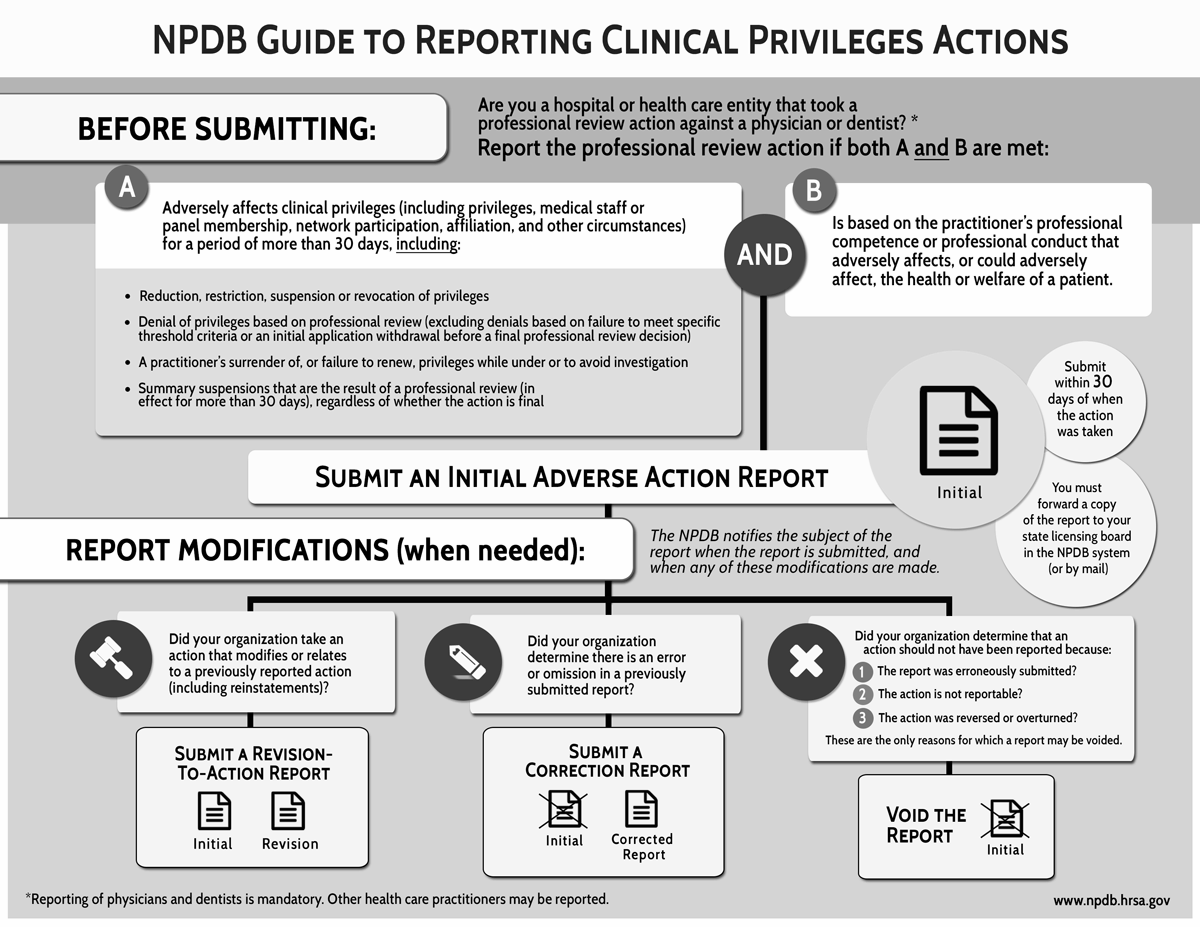
Hospitals and other health intendance entities must report adverse clinical privileges deportment to the NPDB that run into NPDB reporting criteria - that is, any professional person review action that adversely affects the clinical privileges of a physician or dentist for a menstruum of more than than thirty days or the credence of the give up of clinical privileges, or any restriction of such privileges by a physician or dentist, (1) while the md or dentist is under investigation past a health care entity relating to possible incompetence or improper professional person behave, or (2) in return for not conducting such an investigation or proceeding. Clinical privileges include privileges, medical staff membership, and other circumstances (e.g., network participation and panel membership) in which a physician, dentist, or other health care practitioner is permitted to furnish medical care by a health intendance entity.
Adverse clinical privileges deportment that must exist reported to the NPDB are professional review actions - that is, they are based on a doc's or dentist's professional competence or professional conduct that adversely affects, or could adversely affect, the health or welfare of a patient. Generally, the entity that takes the clinical privileges action determines whether the doc's or dentist's professional competence or professional behave adversely affects, or could adversely impact, the health or welfare of a patient. Hospitals and other wellness care entities must report clinical privileges actions taken confronting physicians and dentists when those actions meet the criteria for reportability.
In addition, hospitals and other health care entities may report - and are encouraged to report - clinical privileges actions taken against health care practitioners other than physicians and dentists when those clinical privileges actions are based on the practitioner's professional person competence or professional conduct that adversely affects, or could adversely impact, the wellness or welfare of a patient.
Definitions and examples of these terms are provided in Chapter C: Subjects of Reports.
Table E-v outlines reporting obligations for adverse clinical privileges actions.
Tabular array East-5: Authority for Reporting Adverse Clinical Privileges Actions
| Law | Who Reports? | What is Reported? | Who is Reported? |
|---|---|---|---|
| Title 4 | Hospitals Other health care entities with formal peer review | Sure clinical privileges actions related to professional competence or conduct | Physicians and dentists Other practitioners (optional) |
Hospitals and other eligible health care entities must report:
- Professional review actions that adversely impact a physician's or dentist'south clinical privileges for a catamenia of more than than xxx days
- Acceptance of a physician's or dentist'south give up or restriction of clinical privileges while under investigation for possible professional incompetence or improper professional behave, or in render for non conducting such an investigation or non taking a professional review activeness that otherwise would exist required to be reported to the NPDB
Actions taken against a physician's or dentist's clinical privileges include reducing, restricting, suspending, revoking, or denying privileges, and also include a wellness care entity'due south decision non to renew a doc'southward or dentist's privileges if that determination was based on the practitioner's professional competence or professional person conduct. Clinical privileges actions are reportable once they are made final by the health intendance entity. However, summary suspensions lasting more than 30 days are reportable even if they are non last.
Adverse clinical privileges deportment should non be reported to the NPDB unless they adversely affect the practitioner'southward clinical privileges for a period longer than thirty days.
Adverse clinical privileges actions should non be reported to the NPDB unless they adversely affect the practitioner's clinical privileges for a period longer than 30 days. Matters non related to the professional competence or professional carry of a practitioner should not be reported to the NPDB. For case, agin deportment based primarily on a practitioner'southward advertizement practices, fee construction, bacon arrangement, affiliation with other associations or health care professionals, or other competitive acts intended to solicit or retain business concern are excluded from NPDB reporting requirements.
Hospitals and other health care entities must written report revisions to previously reported agin clinical privileges deportment. For more information, run across Types of Reports.
Administrative Deportment
Authoritative deportment that do not involve a professional review action should not exist reported to the NPDB. For example: A hospital's bylaws require physicians to be board certified in their specialty. A physician's board certification expires and, as a result, the hospital automatically revokes the physician's clinical privileges through an authoritative action. The revocation of clinical privileges was non a outcome of a professional review action and should not exist reported to the NPDB.
Multiple Adverse Actions
If a single professional person review action produces multiple clinical privileges actions (for example, a 12-month suspension followed by a 5-month mandatory consultation period requiring blessing of a department chair before the practise of clinical privileges), simply ane report, reflecting the multiple actions taken, should be submitted to the NPDB. The reporting entity may select up to five Adverse Action Nomenclature Codes on the reporting format to describe the actions taken. Reporting entities should utilise the narrative description to explicate whatsoever additional agin actions imposed.
A Revision-to-Activity Report must exist submitted when each of the multiple actions is lifted or otherwise changed. For the example in the previous paragraph:
- If the Initial Written report clearly states that the suspension is to end after 12 months, and the mandatory consultation menses is to end afterward five months, and if these penalties are not inverse and are fully met by the practitioner, no additional reports should be submitted
- If, after the Initial Report is submitted, the break flow is extended to 14 months or the mandatory consultation period is shortened to 4 months, a Revision-to-Action Study must be submitted when either change is imposed
If an adverse action confronting the clinical privileges of a practitioner is based on multiple grounds, only a unmarried study should be submitted to the NPDB. Nonetheless, all reasons for the action should be reported and explained in the narrative description. The reporting entity may select up to four Basis for Action Codes to betoken these multiple reasons. Additional reasons should be summarized in the narrative clarification.
Denials or Restrictions
Denials or restrictions of clinical privileges for more than than 30 days that issue from professional review actions relating to the practitioner's professional competence or professional carry that adversely affects, or could adversely affect, the wellness or welfare of a patient must exist reported to the NPDB. This includes denials of initial applications for clinical privileges. When used by the NPDB in the context of clinical privileges actions, a "brake" is the result of a professional person review action based on clinical competence or professional deport that leads to the disability of a practitioner to exercise his or her ain contained judgment in a professional setting.
Annotation that a denial of clinical privileges at appointment or reappointment that occurs solely because a practitioner does not meet a health care institution'south established threshold criteria for that particular privilege should not be reported to the NPDB. Such denials are not deemed the result of a professional review activity relating to the practitioner's professional competence or professional acquit but are considered decisions based on eligibility. In add-on, if a hospital or other health care entity retroactively changes the threshold criteria for a particular clinical privilege, a physician who does not run into the new criteria volition lose previously granted clinical privileges. This loss of privileges should not be reported to the NPDB.
Examples of eligibility threshold criteria may include: (one) minimum professional liability coverage, (2) board certification, (3) geographic proximity to the hospital, and (4) performance of a minimum number of procedures prescribed for a particular clinical privilege.
Withdrawal of Applications
A practitioner'south sensation that an investigation is existence conducted is not a requirement for filing a report with the NPDB.
Voluntary withdrawal of an initial application for medical staff appointment or clinical privileges prior to a final professional person review activity generally should not be reported to the NPDB. However, if a practitioner applies for renewal of a medical staff appointment or clinical privileges and voluntarily withdraws that application while under investigation by the wellness care entity for possible professional incompetence or improper professional person conduct, or in return for not conducting such an investigation or non taking a professional review activity, then the withdrawal of application for renewal of clinical privileges must be reported to the NPDB. These actions must be reported regardless of whether the practitioner knew he or she was nether investigation when the renewal application for medical staff engagement or clinical privileges was withdrawn. A practitioner's awareness that an investigation is being conducted is not a requirement for filing a report with the NPDB.
Nonrenewals
Nonrenewals of medical staff engagement or clinical privileges generally should not be reported to the NPDB. However, if the practitioner does not utilise for renewal of medical staff appointment or clinical privileges while under investigation by the wellness intendance entity for possible professional person incompetence or improper professional comport, or in return for not conducting such an investigation or not taking a professional review activeness, the outcome is considered a give up while nether investigation and must be reported to the NPDB. These actions must be reported regardless of whether the practitioner was enlightened of the investigation at the fourth dimension he or she failed to renew the staff appointment or clinical privileges. A practitioner's awareness that an investigation is being conducted is not a requirement for filing a report with the NPDB.
Investigations
Investigations should not exist reported to the NPDB. However, a surrender of clinical privileges or failure to renew clinical privileges while under investigation or to avoid investigation must exist reported.
NPDB interprets the give-and-take "investigation" expansively. Information technology may look at a health care entity's bylaws and other documents for assist in determining whether an investigation has started or is ongoing, but information technology retains the ultimate say-so to determine whether an investigation exists. The NPDB considers an investigation to run from the showtime of an inquiry until a final decision on a clinical privileges action is reached. In other words, an investigation is non limited to a health care entity'southward gathering of facts or limited to the manner in which the term "investigation" is defined in a hospital'south by-laws. An investigation begins as soon as the health intendance entity begins an inquiry and does not end until the wellness care entity'south determination-making say-so takes a final action or makes a conclusion to non further pursue the matter.
A routine, formal peer review procedure under which a wellness care entity evaluates, against conspicuously divers measures, the privilege-specific competence of all practitioners is not considered an investigation for the purposes of reporting to the NPDB. Notwithstanding, if a formal, targeted process is used when issues related to a specific practitioner's professional competence or conduct are identified, this is considered an investigation for the purposes of reporting to the NPDB.
A health intendance entity that submits a clinical privileges activeness based on surrender, restriction of, or failure to renew a doc'south or dentist's privileges while under investigation should have evidence of an ongoing investigation at the time of give up, or testify of a plea bargain. The reporting entity should be able to produce evidence that an investigation was initiated prior to the give up of clinical privileges past a practitioner. Examples of acceptable testify may include minutes or excerpts from committee meetings, orders from hospital officials directing an investigation, or notices to practitioners of an investigation (although there is no requirement that the wellness care practitioner be notified or be aware of the investigation).
Guidelines for Investigations
- For NPDB reporting purposes, the term "investigation" is not controlled past how that term may be defined in a health care entity'southward bylaws or policies and procedures.
- The investigation must be focused on the practitioner in question.
- The investigation must business the professional competence and/or professional conduct of the practitioner in question.
- To be considered an investigation for purposes of determining whether an activeness is reportable, the activeness generally should be the precursor to a professional person review activity.
- An investigation is considered ongoing until the wellness care entity'south decision-making say-so takes a final action or formally closes the investigation.
- A routine or general review of cases is not an investigation.
- A routine review of a detail practitioner is not an investigation.
Temporary Clinical Privileges
For the purpose of reporting to the NPDB, no distinction is made between temporary clinical privileges (including just not limited to emergency and disaster clinical privileges) and clinical privileges. If, however, temporary privileges are awarded to a dr. or dentist for a specific amount of time, with no opportunity for renewal - and both the physician or dentist and the privileging political party agree that the privileges are temporary - and the temporary privileges elapse while the practitioner is under investigation, a report should not be submitted to the NPDB. In this scenario, at that place is no opportunity to renew the temporary clinical privileges, so the expiration of the temporary privileges while under investigation cannot be considered a nonrenewal or give up of clinical privileges while under investigation.
Summary Suspensions
A summary break must be reported if information technology is:
- In result or imposed for more than 30 days
- Based on the professional person competence or professional deport of the physician, dentist, or other health intendance practitioner that adversely affects, or could adversely affect, the health or welfare of a patient, and
- The upshot of a professional review action taken by a hospital or other health intendance entity
In add-on, summary suspensions imposed for an indefinite length that have not lasted more than 30 days only are expected to last more than 30 days, and that are otherwise reportable, may exist reported to the NPDB. If the summary suspension ultimately does not last more than 30 days, the study must be voided.
If a summary suspension is confirmed by a review body, the activeness is considered to have taken upshot when it was offset imposed past a hospital official.
The NPDB treats summary suspensions differently from other professional review deportment because the procedural rights of the practitioner are provided following the imposition of a suspension, rather than preceding it. A summary suspension is often imposed past an official (for instance, the chairman of a department) on behalf of the infirmary or health care entity for the purpose of protecting patients from imminent danger. Unremarkably, this action is so reviewed and confirmed past a hospital committee, such every bit a medical executive committee (MEC), every bit authorized by the medical staff bylaws or other official documents (due east.g., rules and procedures, standard operating procedures). Summary suspensions are considered to exist effective when they go into effect, even though they may be subject to review by some committee or body of the wellness care entity according to the entity's bylaws or other official documents.
For purposes of reporting a summary suspension to the NPDB, if the summary suspension is confirmed past the review torso, the activeness is considered to have taken effect when it was first imposed by the hospital official. If a summary interruption is in issue for more than 30 days before an action is taken past the authorized infirmary commission or body, it must be reported to the NPDB. If the authorized hospital committee or trunk does not confirm the initial action or takes a dissimilar professional review action, a Revision-to-Activity Report must be submitted. If the authorized hospital committee or body vacates the summary break, the entity must void the previous written report submitted to the NPDB.
If the summary interruption afterward is modified or revised equally role of a last decision by the governing board or similar body, the health intendance entity must so submit a Revision-to-Activeness Study to supplement the Initial Report submitted to the NPDB.
If the physician, dentist, or other health care practitioner surrenders his or her clinical privileges during a summary break, regardless of whether the suspension has been confirmed past a hospital review trunk, that action must be reported to the NPDB. The action must exist reported because the practitioner is surrendering the privileges either while under investigation apropos professional conduct or professional competence that did or could bear upon the wellness or welfare of a patient, or in return for non conducting an investigation apropos the aforementioned.
This reporting policy for summary suspensions is in keeping with the purpose of the NPDB, which is to protect the public from the threat of incompetent practitioners continuing to practice without disclosure or discovery of previous dissentious or incompetent functioning.
An action must be reported to the NPDB based on whether information technology satisfies NPDB reporting requirements and not based on the name affixed to the action.
An action must exist reported to the NPDB based on whether it satisfies NPDB reporting requirements and not based on the name affixed to the action. A suspension or restriction, whether called immediate, summary, emergency, or precautionary, typically means that a serious question has been raised and must be addressed chop-chop. Therefore, if a hospital or other health care entity suspects but has not confirmed a risk to an individual or individuals and imposes a suspension or brake every bit immediate or precautionary, and the suspension remains in issue for more than 30 days, it must be reported to the NPDB.
Proctors
If a proctor is non required to be present for or corroborate procedures, the activeness should not be reported to the NPDB.
If, as a result of a professional review action related to professional competence or behave, a proctor is required in guild for a physician or dentist to continue in freely exercising clinical privileges, and the period lasts longer than thirty days, the action must exist reported to the NPDB. In other words, if, for a period lasting more than thirty days, the physician or dentist cannot perform sure procedures without proctor approval or without the proctor existence nowadays and watching the physician or dentist, the action constitutes a restriction of clinical privileges and must exist reported.
However, if the proctor is not required to be present for or approve the procedures (for example, if the proctoring consists of the proctor reviewing the medico'south or dentist's records or procedures later on they occur), the activeness is not considered a restriction of clinical privileges and should non exist reported to the NPDB.
Residents and Interns
Residents and interns generally should non exist subjects of agin clinical privileges deportment because they are trainees in graduate wellness professions instruction programs and are not granted clinical privileges inside the meaning of NPDB regulations, but they are authorized past the sponsoring establishment to perform clinical duties and responsibilities within the context of their graduate educational programme. However, adverse clinical privileges deportment based on events occurring outside the telescopic of a formal graduate educational programme - for example moonlighting in the intensive care unit or emergency room - must be reported to the NPDB.
Length of Restriction
Entities must report clinical privileges deportment to the NPDB if they result from a professional person review action and last longer than 30 days. Title Four requires "a professional person review activity that adversely affects the clinical privileges of a physician or dentist for longer than 30 days" to be reported (emphasis added). The NPDB has consistently interpreted "adversely affects" to hateful the affect of the restriction, not the manner in which the restriction is written.
If a doctor's or dentist's privileges are adversely affected for longer than 30 days, the brake must exist reported, regardless of how the health care entity writes the brake. For example, summary suspensions must exist reported if imposed or in effect for longer than 30 days. Nonetheless, summary suspension reports must be voided if the reported interruption did not ultimately last longer than thirty days. As is the case with any restriction, the reportability of the activity is adamant by the number of days privileges are restricted.
A health care entity may choose to structure a restriction based on when a wellness care practitioner demonstrates clinical competence, rather than attaching a specific timeframe to the action. A pregnant percentage of clinical privileging actions are reported to the NPDB as "indefinite" in length, placing the responsibleness on the practitioner to demonstrate to the entity that he or she no longer needs the restriction. If such an adverse activeness is in effect for more 30 days, it must be reported.
With the exception of summary suspensions, which may exist reported whenever a summary pause is expected to last more than xxx days, a brake begins at the time a dr. cannot practice the full scope of his or her privileges and is reportable to the NPDB in one case that restriction has been in place for 31 days. For example, proctoring may or may not be reportable depending on the type of proctoring and the length of fourth dimension information technology is in outcome. If a physician or dentist cannot perform certain procedures without proctor approval or presence, this is considered a restriction on privileges. The disability to exercise the full telescopic of privileges without a proctor's presence or blessing is a brake. One time the physician or dentist is prohibited from performing the procedure without a proctor, his or her privileges are adversely affected. The number of cases required to be proctored at the time of imposition, or the expectation that a restriction conclude in fewer than 31 days, is irrelevant for reporting purposes. The reportability of a proctoring restriction hinges on whether the restriction, in fact, is in effect for a period longer than thirty days.
Confidentiality Laws Related to Drug and Alcohol Handling
If a clinical privileges activity is taken and the practitioner enters a drug or alcohol treatment or rehabilitation plan equally a effect, the adverse action must be reported. This is true fifty-fifty if the treatment is a condition of probation. Yet, the fact that the practitioner entered a drug or booze treatment facility should non exist reported.
Submitting a Copy of the Written report to a State Licensing Board
A copy of the report that health intendance entities receive after a clinical privileges action study is candy successfully past the NPDB must be provided to the advisable land licensing board in the state in which the health intendance entity is located. Alternatively, NPDB reporters may elect to send an electronic version of the study to the appropriate state licensing lath through the NPDB'due south Electronic Study Forwarding service, provided the state board has agreed to take electronic notices of an action.
Sanctions for Declining to Written report to the NPDB
A hospital or other health care entity that has substantially failed to submit adverse clinical privileges reports tin lose, for 3 years, the immunity protections provided under Title Four for professional review actions it takes confronting physicians and dentists based on their professional person competence and professional conduct.
The secretary of HHS will bear an investigation if in that location is reason to believe that a wellness care entity has substantially failed to report required adverse deportment. If the investigation reveals that the health care entity has not complied with NPDB regulations, the secretary will provide the entity with written detect describing the noncompliance. This written detect provides the entity with the opportunity to correct the noncompliance and notifies it of its correct to request a hearing.
A asking for a hearing must contain a argument of the textile factual issues in dispute to demonstrate cause for a hearing and must be submitted to HHS within 30 days of receipt of the discover of noncompliance. These problems must be both substantive and relevant. An example of a cloth factual issue in dispute is a health care entity refuting HHS's claim that the health intendance entity failed to meet reporting requirements.
A request for a hearing volition be denied if it is untimely or lacks a argument of material factual issues in dispute, or if the argument is frivolous or inconsequential. Hearings are held in the Washington, DC, metropolitan area.
If a asking for a hearing is denied or if HHS determines that a health intendance entity has substantially failed to report information in accordance with NPDB requirements, the name of the entity will be published in the Federal Register, and the entity will lose the immunity provisions of Title Four with respect to professional review activities for a period of 3 years, commencing 30 days from the date of publication in the Federal Register.
Table Eastward-6 provides examples of activities that should and should not be reported as clinical privileges actions.
Tabular array Due east-6: Determining if Clinical Privileges Actions Must exist Reported
| | |
|---|---|
| Based on assessment of professional person competence, a proctor is assigned to a physician or dentist for a period of more thirty days. The proctor must grant approval before the practitioner can perform procedures. | Yes |
| Based on assessment of professional competence, a proctor is assigned to supervise a physician or dentist for a flow of more than 30 days, simply the proctor need non be present or grant approving before medical care is provided by the practitioner. | No |
| Based on assessment of professional competence, a proctor is assigned to picket a doc's or dentist's procedures for a period of more than xxx days, and the proctor needs to exist present or grant blessing before medical intendance is provided past the practitioner. | Yep |
| Practitioners who accept recently been granted clinical privileges are routinely assigned a proctor for 60 days as required by hospital policy | No |
| A physician or dentist restricts or surrenders clinical privileges; the physician or dentist is nether investigation related to professional person competence or professional conduct. | Yes |
| A physician or dentist restricts or surrenders clinical privileges for personal reasons; the physician or dentist is not under investigation related to professional person competence or professional conduct. | No |
| A md or dentist restricts or surrenders clinical privileges in return for not conducting an investigation related to professional competence or professional conduct. | Yes |
| A doc or dentist surrenders clinical privileges for personal reasons but is under investigation for professional competence or conduct. | Yeah |
| A doctor or dentist is denied medical staff engagement or clinical privileges because the health intendance entity has also many specialists in the practitioner's subject area | No |
| A physician's or dentist's awarding for medical staff engagement is denied based on a professional review action related to professional competence or professional conduct | Yeah |
| A medico's or dentist's asking for clinical privileges is denied or restricted for more than than 30 days based upon an cess of clinical competence as divers by the infirmary. | Yep |
| A physician's or dentist's clinical privileges are suspended for reasons not related to professional competence or professional conduct. | No |
Source: https://www.npdb.hrsa.gov/guidebook/EClinicalPrivileges.jsp
0 Response to "What Penalties Does the Oig Enforce When Physician Peer Reviews Are Not Done on Time"
ارسال یک نظر